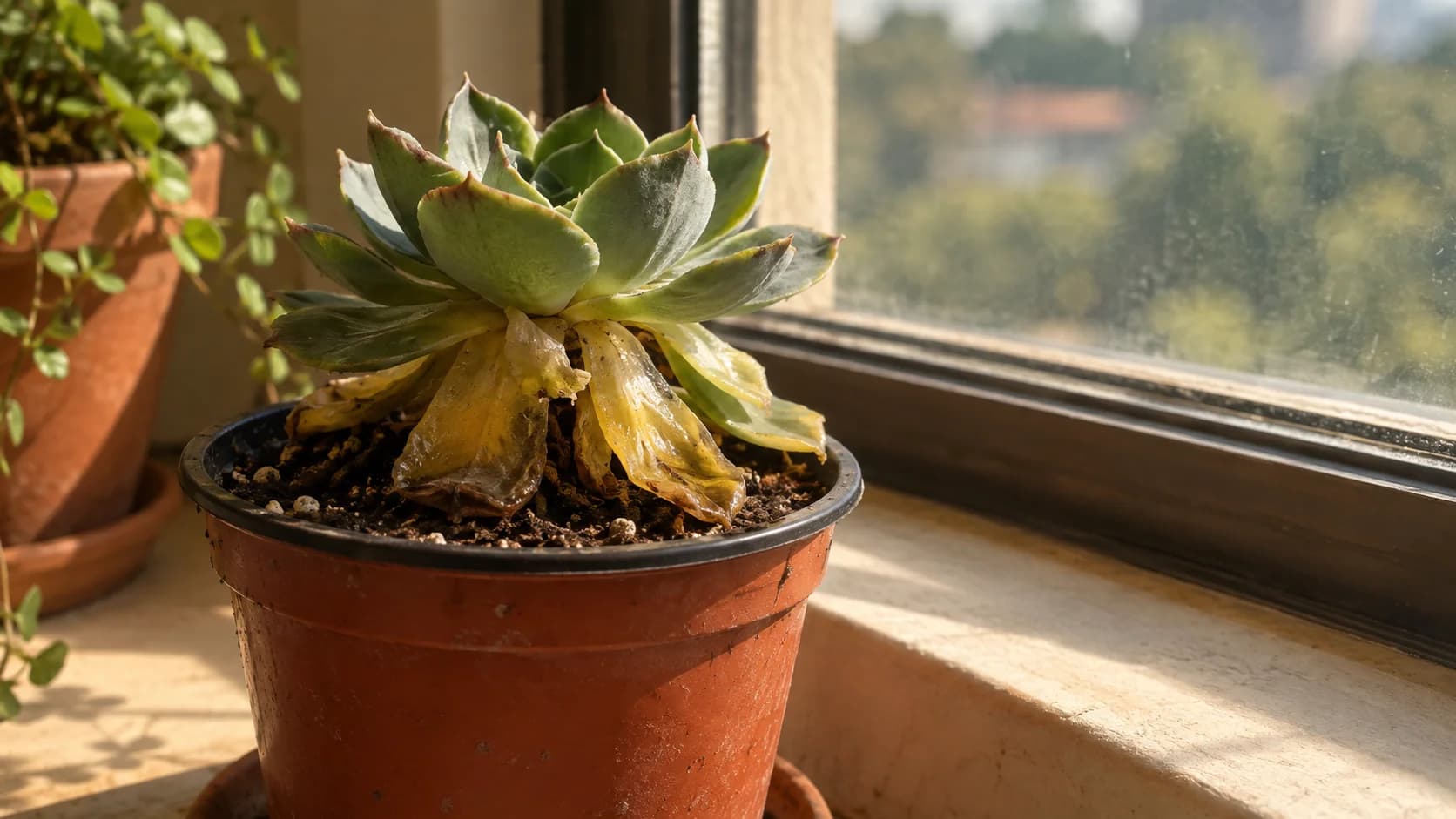
10 Reasons Your Succulent Is Dying

  1. Overwatering — the #1 killer, especially in monsoon season
  2. No drainage hole in the pot
  3. Wrong window direction or too little light
  4. Regular garden mitti holding too much moisture
  5. Monsoon humidity causing fungal rot
  6. Underwatering in AC rooms or dry winters
  7. Sunburn from harsh afternoon direct sun
  8. Root rot after repotting too soon
  9. Pests mistaken for natural leaf drop
  10. AC dry air shrivelling the root zone

The number one question we get at Succulent Sphere — sometimes three or four times in a single day — is why a plant that looked completely healthy last week is suddenly soft at the base, dropping leaves, or going yellow from the bottom up. Every single time, it's one of these ten things. Let's go through each one honestly, without the usual generic advice that was written for a European windowsill, not a Mumbai flat.

Side-by-side comparison — healthy firm succulent vs mushy overwatered one showing visible colour and texture difference
Problem 01

Overwatering — The One That Gets Everyone

Look, I'm not going to pretend this is rare. It isn't. Nine out of ten dying succulents we see in customer messages have the same backstory — someone watered two or three times a week because the plant "looked thirsty," and the roots couldn't take it.

Succulents store water in their leaves. That's the whole adaptation. When you water too often, the roots sit in wet soil, can't breathe, and begin rotting while the leaves above still look fine. By the time you notice yellowing or mushiness, the root system is already damaged — sometimes beyond saving.

How to tell it's overwatering, not something else

The leaves go soft and slightly translucent, like a grape that's been sitting in water too long. The stem base feels mushy when pressed. Leaves detach with zero resistance — you brush against them and they fall. If the soil still smells damp or sour days after your last watering, that's rot settling in below the surface.

What You See

Mushy translucent leaves. Soft stem at the base. Leaves dropping without any force. Soil smells sour well after watering.

What to Do

Pull the plant out. Cut every black or slimy root clean. Air-dry for 2–3 days in a shaded spot. Repot in fresh dry fast-draining soil. Don't water for a full week.

India-specific rule: During June–September monsoon, cut watering to once every 3 weeks — or skip it entirely for coastal cities. The humidity keeps the soil far more moist than it looks. This is the biggest mistake we see from customers in Mumbai, Kochi, and Chennai — they continue a normal schedule through August and wonder why the plant collapsed.

Problem 02

No Drainage Hole — Silent Root Suffocation

Those beautiful glazed ceramic decorative pots with no hole at the bottom? The succulent is slowly drowning in them. Even with perfect watering — right amount, right frequency — water has nowhere to go. It collects at the bottom, stays there, and the roots rot from below while the surface soil looks completely dry and fine.

We hear this regularly from customers who bought a beautiful pot at a home decor store, planted their succulent directly into it, and watched it collapse three to four weeks later with no obvious reason.

What You See

Plant slowly collapses from the base upward. Top leaves look fine. Stem goes soft at soil level.

What to Do

Move to a pot with drainage immediately. Use your decorative pot as a cachepot — drop the nursery pot inside and empty collected water after every watering.

🪴

Our Pots Are Drainage-Ready

Every pot in the Succulent Sphere collection has a proper drainage hole — designed for succulents specifically, not just repurposed decor. Browse our collection if you want something that looks good and actually keeps the plant alive.

Shop Elegant Pots →
Problem 03

Wrong Light — And the Window Direction Problem

Global succulent advice says "bright indirect light." That was written for homes in California and the UK where "bright indirect" means a diffuse glow all day. In India, your east-facing window in Jaipur delivers 3 hours of sharp morning sun. Your south-facing window in Delhi gets punishing afternoon heat through summer. A west-facing Mumbai balcony in May is almost hostile to any soft-leaved plant.

Succulent sitting on an east-facing Indian apartment windowsill with gentle morning light coming through
East-facing windows with morning light are the sweet spot for most Indian apartments. Keep sensitive varieties here year-round.
Window Direction Light Quality Best Varieties Risk
East-facing Gentle direct morning sun Echeveria, Haworthia, most rosette types Low — ideal placement for most
South-facing Intense all-day sun Crassula, Aloe, drought-tolerant types Sunburn in summer — use sheer curtain March–Oct
West-facing Hot harsh afternoon sun Only very heat-tolerant varieties High burn risk May–July
North-facing Soft indirect all day Haworthia, Gasteria only Most succulents will stretch and etiolate

If your succulent is growing tall and leggy — lots of space between leaves, leaning toward the window — it's stretching for light. If one side of the leaves has white or papery patches, it's sunburned. Etiolation is fixable by moving to a brighter spot. Sunburn damage is permanent on those leaves, but the plant itself recovers fine once you move it.

Problem 04

Wrong Soil — Garden Mitti Holds Too Much Water

Standard Indian nursery soil — the dark, rich, heavy stuff — is designed for vegetables and flowering plants that want consistent moisture. For succulents, it's a slow death sentence. The water sits in it for days, and even if you're watering perfectly, the roots never get the dry period they need to breathe and stay healthy.

The result looks exactly like overwatering, even if you haven't done anything wrong. This trips up a lot of people — they water infrequently, do everything right, and still lose the plant because the soil itself is the problem.

Easy fix with no special equipment: Mix regular potting soil 1:1 with coarse river sand (not fine beach sand — that compacts and makes things worse). Add a small handful of perlite if you can find it at a nursery. When you water, the mix should drain completely in under a minute. If it drains slowly, add more sand.

Problem 05

Monsoon Humidity — India's Most Underrated Succulent Killer

This doesn't get talked about enough. Succulents evolved in arid climates. When Indian monsoon arrives and humidity climbs from 40% to 85–90% — especially in coastal cities — the atmospheric moisture alone starts damaging plants in even slightly damp soil. You don't have to overwater for rot to set in. The air does it for you.

One of our team members moved all the outdoor Echeverias inside by June 10th last year. The ones left on the balcony had grey fuzzy patches and soft spots within 8 days. That's fungal rot from humidity — it behaves differently from overwatering rot but is just as destructive.

City Monsoon Window Action Required
Mumbai / Pune June 1 – Sept 20 Move indoors, stop watering entirely, ensure airflow
Chennai / Kochi June 1 – Nov 30 Longest risk — keep indoors, check weekly for fungal spots
Bangalore June 1 – Oct 15 Reduce to once a month, confirm soil is draining
Delhi / NCR July 1 – Sept 15 Reduce watering, watch soil moisture carefully
Kolkata June 10 – Sept 30 Treat same as Mumbai — aggressive humidity management
Monsoon Fungal Rot Signs

Grey or brown fuzzy patches on leaves. Soft spots appearing rapidly. Musty smell without any recent watering.

What to Do

Move indoors immediately to an AC room or ventilated spot. Remove affected leaves. Spray with diluted neem oil. Stop watering for 2 weeks minimum.

· · ·
Problem 06

Underwatering — It Happens Too, Especially in AC Rooms

Not every struggling succulent is overwatered. This mistake goes the other direction in Delhi winters or in any flat where AC runs most of the day. The soil dries out faster than you'd expect, and the plant starts pulling moisture from its own leaves to survive. By the time you notice the problem, the leaves have been cannibalising themselves for days.

What You See

Leaves look thin and papery, wrinkled from the edges inward. Plant looks slightly deflated. Bottom leaves go crispy and brown — dry, not mushy.

What to Do

Water thoroughly until it drains from the bottom. The plant will visibly plump back up within 24–48 hours. Resume watering based on soil dryness, not a fixed schedule.

The quickest way to tell underwatering from overwatering: underwatered leaves feel thin and wrinkly, like a deflated balloon. Overwatered leaves feel soft and wet, almost bloated. Feel both once and you'll never confuse them again.

Problem 07

Sunburn — When "More Sun" Goes Too Far

People read that succulents love sun and immediately put them in the harshest direct afternoon spot they have. West-facing balconies in May, south windows at 2 PM during summer. What happens: bleached white or pale brown patches appear on the sun-facing side of the leaves. The colour washes out. The texture goes papery.

Sunburn is cosmetically permanent on the affected leaves — those patches won't green up again. But the plant is absolutely fine. Move it to a gentler position, let new growth come through from the centre, and the sunburned leaves shed naturally over time. Nothing else needed.

Safe window for Indian sun exposure: Direct morning sun until 10 AM is safe for almost every succulent variety. After 10 AM from March through October, use a sheer net curtain or shift the plant back from the glass — especially for Echeverias and delicate rosette types that burn fastest.

Problem 08

Root Rot After Repotting

Repotting is stressful for a succulent even when done correctly. Fine root hairs break off, root tips are open, and the plant is temporarily in recovery mode. Water the plant immediately after repotting and those open root ends — which can't absorb yet — sit in moisture and begin rotting instead of healing.

This is one of the most consistent mistakes new plant owners make. It feels counterintuitive to not water a freshly repotted plant, but that first week of dry recovery is critical.

What You See

Plant looked healthy after repotting, then collapsed 1–2 weeks later. Stem base goes soft. Leaves drop easily.

What to Do

Pull out again, trim all black or soft roots, let it dry 2–3 days, repot in fresh dry soil. Then wait 7 days before any water — even a small amount.

If you received a plant from us or from any online seller, it arrives in fresh soil and needs that same settling period. The card in our packaging says 5–7 days before first water — it's there for exactly this reason.

Problem 09

Leaves Falling Off — Natural Shedding vs Pest Damage

Not all leaf drop is a crisis. Succulents routinely shed their oldest bottom leaves as they grow — these dry to a crispy, papery brown from the base and fall off on their own. That's healthy growth, not dying. You can just remove the dry leaf and move on.

Pest damage looks different. The leaves that fall are green, plump, and clearly shouldn't be dropping. Or you'll see white cottony fluff tucked between the leaves (mealybugs) or tiny rust-coloured specks on the undersides that move (spider mites). Once you spot either, act immediately — they spread to nearby plants fast.

Close-up of mealybug white fluff at the base of succulent leaves — helps readers identify pests vs natural growth
White cottony fluff at leaf bases = mealybugs. Treat each bug individually with 70% isopropyl alcohol on a cotton swab.

Pest fix — no special products needed: For mealybugs, dip a cotton swab in 70% rubbing alcohol (available at any pharmacy) and touch each white clump directly. For spider mites, take the plant outside, spray undersides of all leaves with water, then apply diluted neem oil once a week for three weeks. Isolate any affected plant from your others immediately.

Problem 10

AC Rooms — Dry Air Stressing the Root Zone

AC rooms are actually good for succulents during Indian summers — they keep humidity in check and prevent monsoon-related fungal problems. But AC also aggressively pulls moisture from the air, and in a room running 10+ hours a day, the soil dries out significantly faster than it would in a natural environment.

The fix isn't to avoid AC rooms — it's to adjust. If your succulent normally needs water every 12 days, in a continuously AC room it might need water every 8 days. Stop going by the calendar and start going by the soil. Push your finger 2 inches in. Dry? Water. Cool or damp? Wait.

One more thing: AC vents blowing directly onto the plant create thermal stress — hot outside, cold air blast. Move the plant so it benefits from the cooler room temperature without sitting in the direct airflow path from the vent. Two to three feet to the side is ideal.

· · ·
Rescue Guide

How to Save a Dying Succulent — Step by Step

If your plant is already in trouble, here's the sequence. Don't skip steps and don't rush the timeline.

Step 1 — Pull it out of the pot. Look at the roots directly. Healthy roots are white or pale tan and firm. Rotting roots are black, brown, or slimy with a sour smell. Dead roots from underwatering are grey and brittle.

Step 2 — Cut every bad root back to healthy tissue. Use clean scissors. Cut until the exposed end is white and firm. Be decisive — leaving one rotting root behind will spread the damage.

Step 3 — Air-dry for 2–3 days. Lay the bare-rooted plant on newspaper in a dry, shaded spot — not direct sun. The cut surfaces need to form a dry callous before contact with soil again. This step gets skipped constantly, and that's exactly why the rescue fails.

Step 4 — Fresh soil, clean pot. Use a fast-draining mix. Make sure the pot is dry and has drainage. Repot gently.

Step 5 — Wait a full week before any water. The hardest step. The plant will look tired and slightly deflated — that's expected. After 7 days, give it a small drink, wait another week, and watch for signs of recovery. New growth from the centre is the best signal you've succeeded.

If the stem is still firm — not mushy — the plant has a very good chance. If the stem has gone soft all the way to the base, chances drop sharply. Either way, check if any leaves are still healthy enough to propagate from. Those become your next plant, and propagation from a saved leaf is one of the most satisfying things in succulent growing.

Not Sure What's Wrong?

Describe your plant's exact symptoms to our AI Plant Assistant — get a specific diagnosis without guessing.

Ask Our Plant Assistant →

Starting Fresh? Our Beginner Collection Is Built for This

Every plant ships potted, care-carded, and ready to display — no repotting stress on day one.

Shop Beginner-Friendly Plants
🌿

Echeveria Menina — Most Forgiving Variety We Stock

Tolerates irregular watering, recovers well from beginner mistakes, and looks stunning even when slightly stressed. If you've killed succulents before, start here. Starting at ₹99.

View Echeveria Menina →
🌱

Elephant Bush — Handles Neglect Better Than Almost Anything

The Portulacaria Afra is genuinely difficult to kill. Pest-resistant, adaptable to varied light, bounces back from both over and underwatering. A great confidence builder. Starting at ₹49.

View Elephant Bush →
🌵

Succulent Sphere Team

We grow, pack, and ship succulents across India. Every care tip here comes from real experience with Indian climates — not global generic advice. Follow us at @succulentsphere for weekly plant care and new arrivals.

Frequently Asked Questions

Why is my succulent dying from the bottom up?

Bottom-up dying is almost always root rot from overwatering or a pot with no drainage. The roots fail first, cutting off water supply to the lower leaves, which go yellow then mushy. Pull the plant out, check the roots — black or slimy means rot. Trim everything brown, let it air-dry 2–3 days, and repot in fast-draining soil. See the rescue guide in this article for the full step-by-step. You can also ask our AI Plant Assistant for a specific diagnosis based on your plant's symptoms.

What does a dying succulent look like vs a healthy one?

A dying succulent typically shows one of four patterns: soft mushy leaves with translucent edges (overwatered), papery wrinkled leaves that look deflated (underwatered), white bleached patches on one side (sunburn), or grey fuzzy spots that appear fast (fungal rot from humidity). A healthy succulent has firm plump leaves with rich colour, a stable upright stem, and active new growth from the centre. Crispy brown leaves at the very bottom are normal shedding — not a warning sign.

How do I save a dying succulent in India?

The process: pull out of the pot, trim all black or mushy roots to healthy white tissue, air-dry for 2–3 days in shade, repot in a fast-draining mix (50% potting soil + 50% coarse sand), then don't water for 7 days. Recovery takes 2–4 weeks — patience is most of the work. The single most important thing is fixing the root cause: stop overwatering, improve drainage, or adjust placement. Treating the symptoms without fixing the cause just delays the same problem.

Why is my succulent turning yellow?

Yellow bottom leaves with soft texture = overwatering or root rot (the most common cause). Yellow leaves spread across the whole plant = too little light or, rarely, a nutrient issue. Yellow with mushy texture = definite overwatering. During Indian monsoon (June–September), reduce watering sharply regardless of your normal schedule — the ambient humidity keeps soil moist far longer than it appears, and overwatering damage accelerates significantly in high-humidity conditions.

Why is my succulent dying after repotting?

Almost certainly watered too soon after repotting. When you repot, fine root hairs break and root tips are open wounds. Watering before these callous over (they need 5–7 days) exposes damaged tissue to moisture it can't absorb, and rot begins. If the plant collapsed after a repot, pull it out, trim all soft roots, dry for 2–3 days, repot in fresh soil, and then don't water for another full week. It sounds counterintuitive but it works consistently.

How often should I water succulents in India across different seasons?

Skip fixed schedules — India's climate variation makes them unreliable. Use the finger test instead: push 2 inches into the soil. Dry = water now. Cool or damp = wait. As a rough guide: once every 10–14 days during dry months (October–May), once every 3–4 weeks or skip entirely during monsoon (June–September), more frequently in AC rooms where soil dries faster. Coastal cities like Mumbai and Chennai need less frequent watering than Delhi or Jaipur due to higher ambient humidity year-round.

Can I propagate a dying succulent — and does it actually work?

Yes, and it works well if the leaves are still healthy and plump. Gently twist individual good leaves off the stem — twist rather than cut so the entire base comes away clean. Lay them on dry soil in a bright spot. Within 2–4 weeks, small pink roots emerge from the leaf base, followed by a tiny rosette. It takes 2–3 months to get a proper plant, but it's completely free and one of the most satisfying things about growing succulents. Even a severely struggling plant often still has enough healthy leaves to propagate several new ones from.