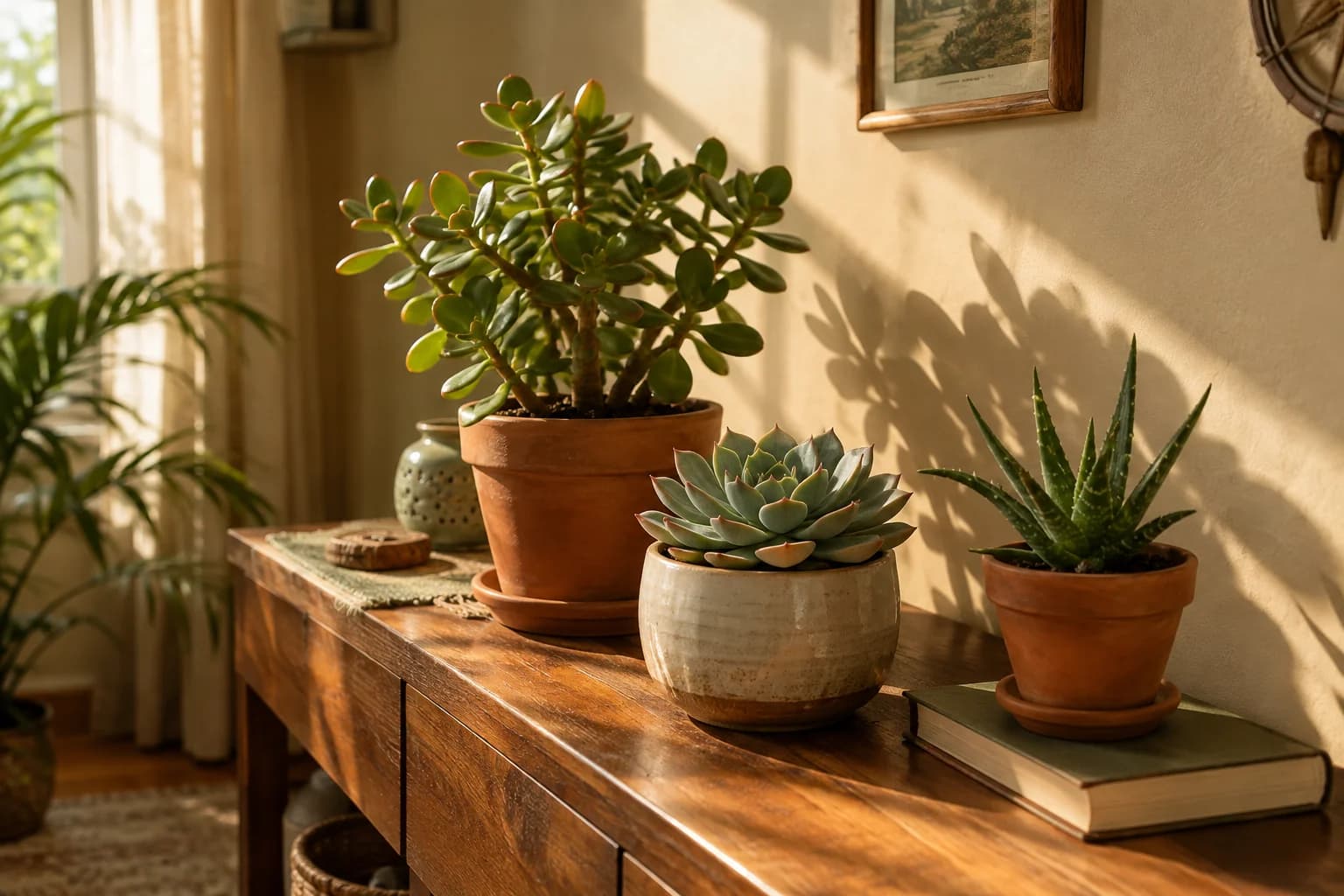
Plant Care · Vastu & Home
Succulents are everywhere in Indian homes right now — easy to care for, pretty to look at, and small enough for even a tiny balcony. But the moment Vastu comes into the picture, things get confusing fast. Is a cactus bad luck? Does the direction really matter? Can a dying plant mean something bad is coming?
Let's go through this simply, one question at a time.
Which Direction Is Best for Succulents According to Vastu?
Most Vastu guides suggest the East or North direction for succulents and small potted plants, since these directions get good morning sunlight and are linked with positive energy. Soft, non-thorny succulents like jade plant and haworthia are considered safest indoors. Thorny types like cactus are usually kept outdoors, often in the South, rather than inside living areas.
A quick note before we go further: Vastu is a belief system, not a science. Nothing here is a claim about facts — it's what's commonly followed and believed in Indian households, laid out simply so you can decide what feels right for your home.
The Cactus Myth Everyone Gets Wrong
The most common belief is that cactus and other thorny succulents bring tension into a home, so they're best avoided indoors — especially in bedrooms or near the main door, where people sit or pass through often.
Here's the part people get wrong: this doesn't mean cactus is a "bad" plant altogether. Most Vastu guidance treats it as fine outdoors — on a balcony, in a garden, or by a boundary wall, often facing South. The thorns are even said to work in your favour there, acting like a shield rather than a problem. It's really about where the plant sits, not whether you're allowed to own one.
Best Vastu Directions for Different Succulents
Not every succulent follows the same rule. Here's a simple breakdown.
| Succulent | Suggested direction | Why |
|---|---|---|
| Jade Plant (Crassula) | Southeast | Widely associated with wealth and stability; a popular gifting plant for this reason |
| Aloe Vera | East, near a window | Considered purifying; East gets gentle morning light |
| Haworthia, Echeveria (soft, non-thorny) | North or East | Safe for indoor spots like living rooms and study tables |
| Cactus (thorny types) | South, outdoors | Kept away from seating areas and the main entrance |
| Any succulent | Avoid Southwest, indoors | Generally considered a less favourable zone for greenery |
If you're not sure which direction your balcony or window faces, a basic compass app on your phone works fine — you don't need anything fancier than that.

Where NOT to Keep Succulents (and Why)
A few spots come up again and again in Vastu guidance, so it's worth knowing them even if you don't follow every rule strictly.
- Bedside tables — thorny succulents especially. The belief is that sharp, pointy plants near where you sleep can disturb rest.
- Directly facing the main door — plants placed right in the doorway are thought to block the flow of energy coming into the home, rather than welcoming it.
- Right next to the Tulsi plant or puja area — most guidance keeps this space reserved, without other plants crowding it.
- Southwest corner — generally advised against for greenery in general, succulents included.
A Plant Problem Isn't Always a Vastu Problem
This is the part that actually matters more than most Vastu lists. We had a customer in Pune message us, quite worried, saying her jade plant's leaves had started dropping right after she'd placed it in the "correct" southeast corner — and she wondered if she'd done the placement wrong, or worse, if it was a sign of something.
It wasn't either. Her balcony got harsh afternoon sun for a few hours that particular corner of her flat happened to catch, and the plant was simply sunburnt. Nothing to do with direction as a belief — just direction as physical sunlight.
This mix-up happens a lot. A plant that's overwatered, underwatered, sunburnt, or root-bound will show the exact same signs — yellowing, drooping, leaves falling — no matter which direction it's sitting in. Before assuming anything deeper is going on, it's worth ruling out an actual care issue first. Our guide on why succulents die and how to fix common problems in Indian homes covers exactly this, symptom by symptom.
Looking to start a Vastu-friendly corner at home? Our jade plant and haworthia picks are both considered safe, soft-leaved choices for indoor placement.
Common Vastu Myths About Succulents — Debunked
A few beliefs have spread online that don't really hold up even within Vastu itself. Worth clearing these up.
- Myth: All succulents are unlucky because they're related to cactus. Not true. Most succulents — jade, echeveria, aloe, haworthia — aren't thorny at all, and are treated completely differently from cactus in Vastu guidance.
- Myth: A dying succulent always means bad luck is coming. In almost every case we've seen, it's watering, sunlight, or soil — not an omen. Check the plant first.
- Myth: "Money plant" and jade plant are the same, so Vastu rules for one apply to the other. They're different plants. The trailing "money plant" (Epipremnum) and the succulent jade plant get mixed up constantly, and their care — and their Vastu placement — isn't identical.
- Myth: More succulents in the "lucky" corner means more luck. Overcrowding a small corner with too many pots is generally discouraged — cluttered spaces are seen as blocking energy flow rather than inviting it.

Setting up your own Vastu corner from scratch? Browse the full succulent collection — each listing notes whether it's thorny or soft-leaved, so placement decisions are easier.
Common questions
A few things people usually ask about Vastu and succulents.
Is keeping a cactus at home bad luck?
Not by itself. Most Vastu guidance simply suggests keeping thorny plants like cactus outdoors — on a balcony or garden, often facing South — rather than indoors near seating areas or the bedroom.
Which succulent is considered luckiest for Indian homes?
Jade plant (Crassula ovata) is one of the most commonly recommended, often linked with wealth and placed in the southeast corner. Aloe vera is another popular choice, generally associated with purifying the home's air and energy.
Can I keep succulents in the bedroom?
Soft, non-thorny succulents are usually considered fine in a bedroom. Thorny types like cactus are the ones most commonly advised against near where you sleep.
Does a dying succulent mean something bad in Vastu?
Not necessarily. In most cases, a struggling succulent points to a care issue — overwatering, too much direct sun, or poor drainage — rather than anything symbolic. It's worth checking the basics before reading further into it.
Is jade plant the same as money plant?
No, they're two different plants that often get confused. Money plant usually refers to Epipremnum aureum, a trailing vine, while jade plant is a succulent with thick, fleshy leaves. Their care needs and typical Vastu placement aren't the same.
Where should I avoid placing succulents at home?
Common spots to avoid are directly facing the main entrance, right beside a Tulsi or puja area, and the southwest corner of the home. Bedside placement of thorny succulents is also generally discouraged.